ATLA VENTURES
More looks
App Available Ochre

Claude PC Widget

Everything you spent with Claude today, always on top.

The Claude PC Widget is a small always-on-top panel for Windows that shows what your Claude Code usage has cost today, summed across every session you have run since midnight. The total only climbs through the day and resets each morning, so nothing jumps around when you switch chats - it reads the same transcript files Claude Code already writes to your machine. No account, nothing to configure, and it makes no network connection of its own.

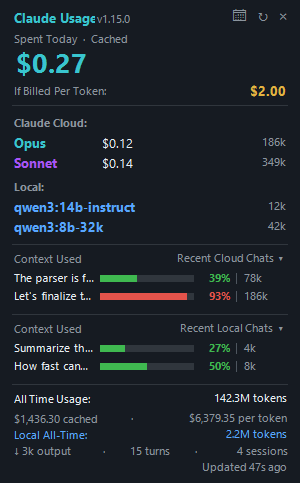
Two numbers sit at the top: a cache-aware estimate of what today would actually cost on the API, and the raw per-token sticker price next to it. Below that is one row per model you used today - Claude Cloud (Opus, Sonnet, Haiku, Fable) and, tracked separately with its own total, any local model like Ollama. Under that, a live list of your most-recent chats, each with a bar for how full its context window is right now, so you can see which conversation is about to run out of room before it does.

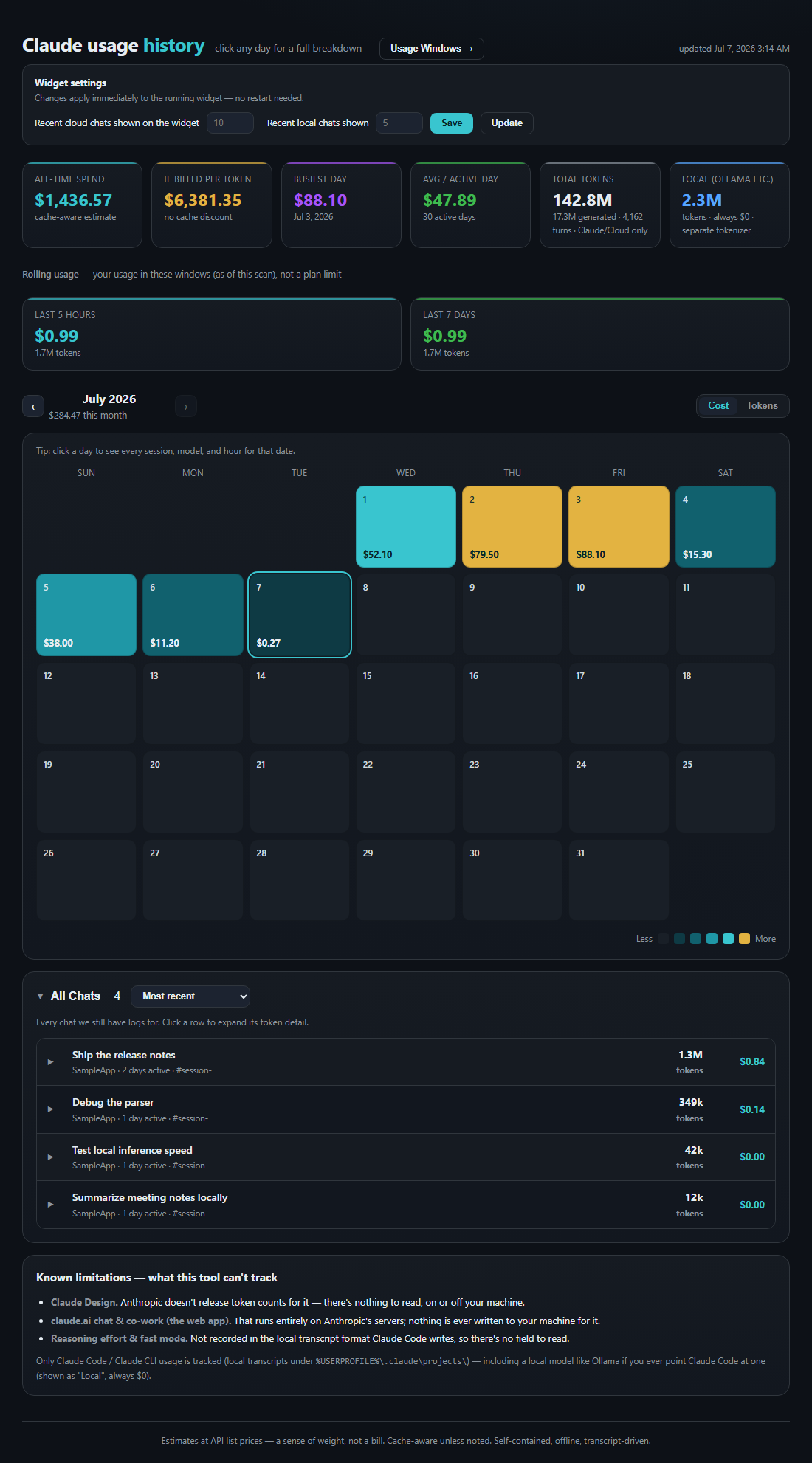
Click the calendar button on the widget and it opens a full usage history in your browser: a heat-mapped month grid, all-time totals, rolling 5-hour/7-day windows, and a click-through breakdown of any day - by model, by hour, and by individual chat session. The widget and the calendar read the same saved history, so your history survives even after Claude Code prunes old transcripts. (This is an independent tool, not made or endorsed by Anthropic.)

What it does

Today, all of itEvery session since midnight added together - a daily total that only grows, instead of a single session that resets.
Two honest numbersA cache-aware cost estimate next to the full per-token list price, so you can see what caching actually saved you.
Context bars per chatEach recent conversation gets a bar showing how full its context window is - green to amber to red - with the token count beside it.
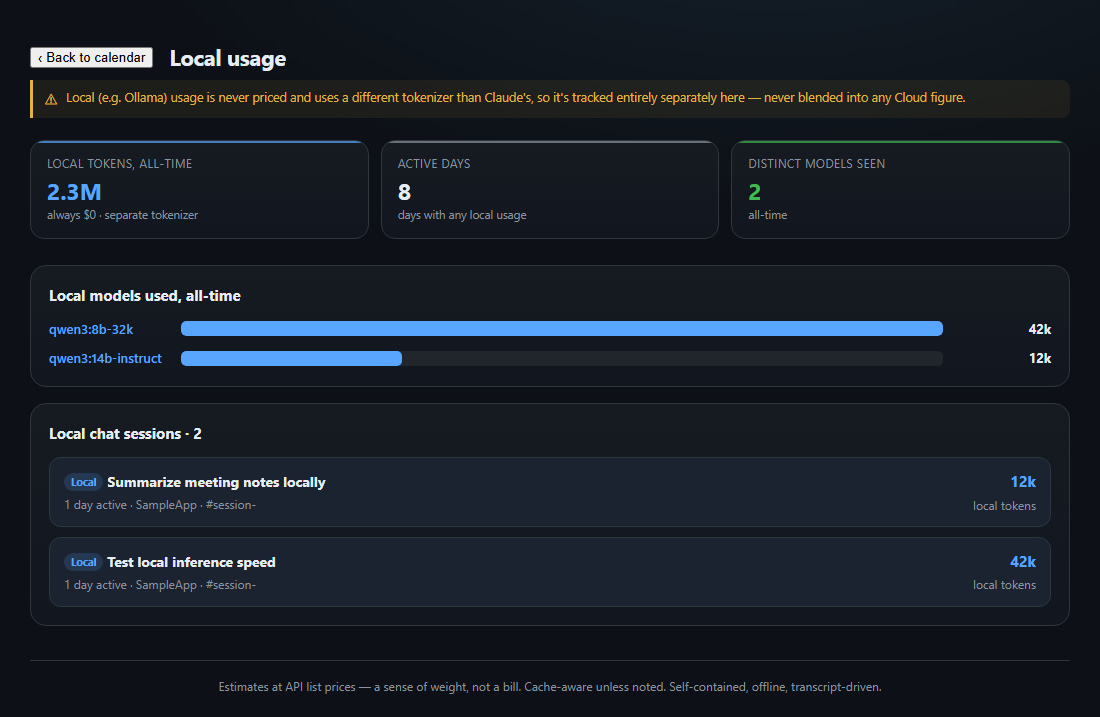
Cloud and local, never mixedOllama and other local models are tracked with their own totals and never priced into your Claude bill.
A full usage calendarOne click on the widget opens a heat-mapped month grid, all-time totals, and rolling 5-hour/7-day windows in your browser.
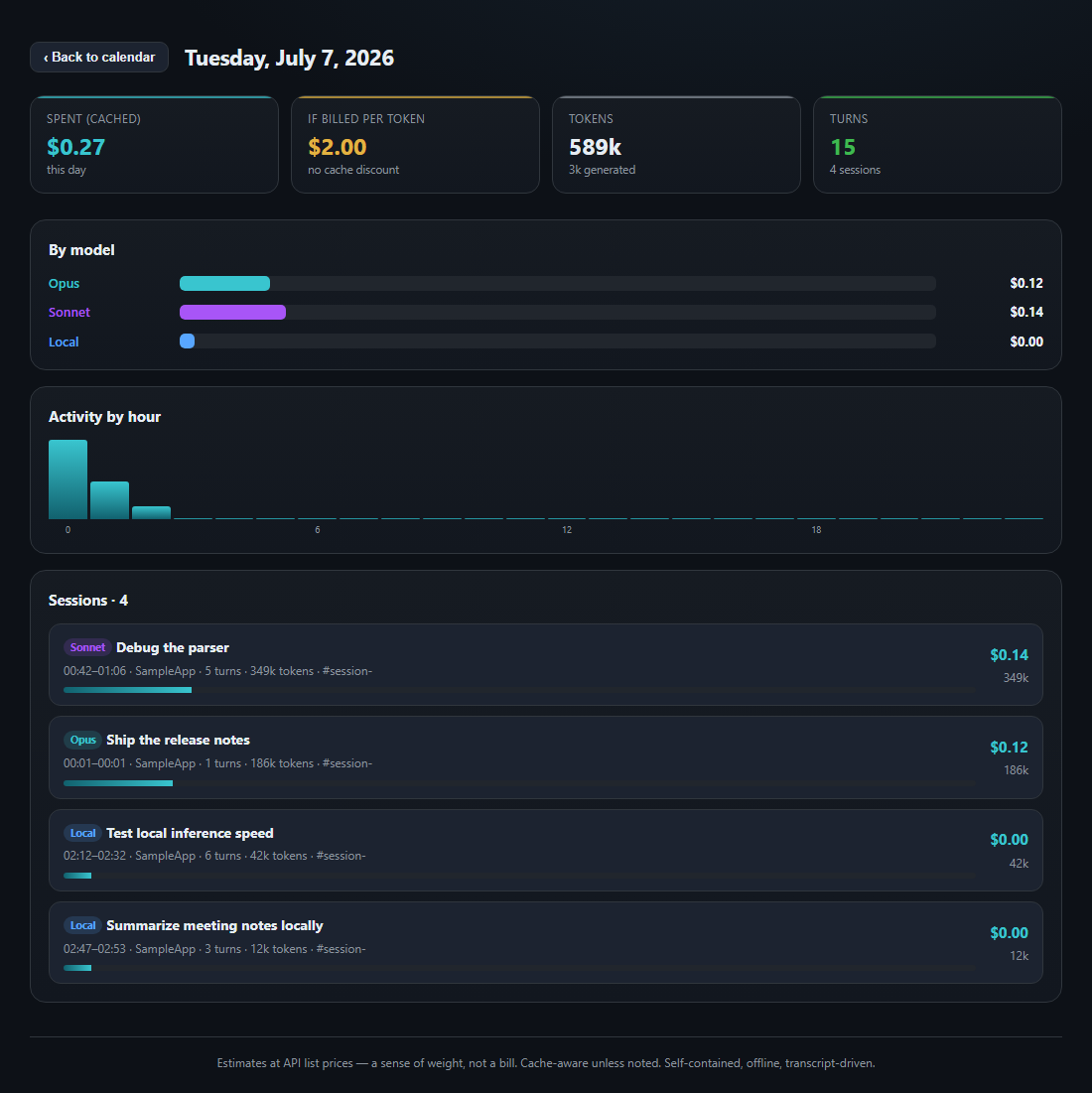
Any day, down to the chatClick a day in the calendar for its per-model breakdown, hourly activity, and every chat session from that day - click a session to jump to its own all-time totals.
Archive without losing anythingRight-click a chat to tuck it out of the recent list - its tokens still count in every total, and unarchiving it back is just as easy.

Install

  1. Download the zip and unzip it wherever you'll keep it.
  2. Double-click Install.cmd - it copies the widget into place, unblocks it (so Windows won't nag on every launch), and offers a Desktop and Start Menu shortcut.
  3. The panel appears on your desktop, always on top. Drag it wherever you want; it remembers the spot.
Requirements: Windows 10 or 11. Claude Code, used at least once today - the widget reads the local transcripts it writes under %USERPROFILE%\.claude\projects\. No other install needed: it runs on the PowerShell + .NET already built into Windows.

Screenshots

The Claude PC Widget panel on the desktop, showing today's spend, a Claude Cloud and Local model breakdown, and recent chats with context bars.
The panel itself - today's cost, model breakdown, and how full each recent chat's context is.
The usage history calendar's home page: all-time summary cards, rolling 5-hour and 7-day usage, and a heat-mapped month grid.
Click the calendar button for a heat-mapped month view and your all-time totals.
A single day's detail view in the calendar: cost and token cards, a per-model breakdown, hourly activity, and that day's individual chat sessions.
Click any day for a full breakdown - by model, by hour, and by chat session.
The calendar's Local Usage page: all-time local tokens, active days, distinct local models used, and every local chat session.
Local models like Ollama get their own page - a different tokenizer, always $0, never blended into your Claude Cloud numbers.